Why Alpha Brain Waves Meditation Is the Cleanest Way to Measure Attention
If you have heard about alpha brain waves meditation and wondered why the neurofeedback world keeps mentioning them, the short answer is this: alpha waves are the brain’s natural rhythm of relaxed wakefulness, and they happen to be the cleanest real-time signal we have for whether you are focused or drifting. Meditation has always been a black box. Alpha activity is the first reliable window into it.
Brainwaves, Briefly
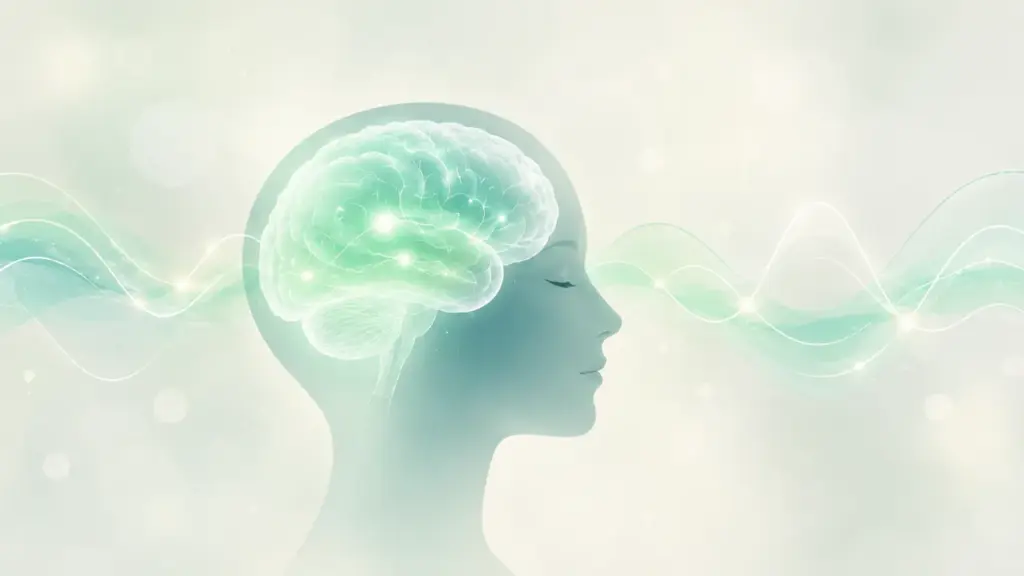
Before getting into alpha specifically, it helps to know where it sits in the broader landscape of brain activity. Different mental states produce different dominant rhythms, and meditation effectively involves moving between several of them in a deliberate way.
Your brain is an electrical organ. Billions of neurons fire every second, and together they generate patterns of electrical activity called brainwaves. Different speeds correspond to different mental states:
- Delta (0.5–4 Hz): deep, dreamless sleep.
- Theta (4–8 Hz): drowsiness, deep meditation, dreaming.
- Alpha (8–12 Hz): relaxed wakefulness, disengagement of the visual system.
- Beta (13–30 Hz): alertness, thinking, problem-solving.
- Gamma (30 Hz+): high-level cognition and integration across brain regions.
Alpha Waves: The Rhythm of Disengagement
Alpha waves typically range from 8 to 12 Hz. They are strongest when your eyes are closed, your body is still, and your mind is calm but awake. They show up most clearly in the occipital cortex the part of the brain at the back of your head that processes vision. Close your eyes and alpha rises. Open them, look at anything, and alpha drops. That is the headline effect.
This is why alpha became famous as the signature of the resting brain. But the more interesting fact about alpha is that the rise-and-fall pattern is not just about whether your eyes are open. It also tracks where your attention is, even when your eyes stay closed. That second effect is what makes alpha so useful for meditation training.
Two Faces of Alpha Brain Waves Meditation: Focus vs. Relaxation
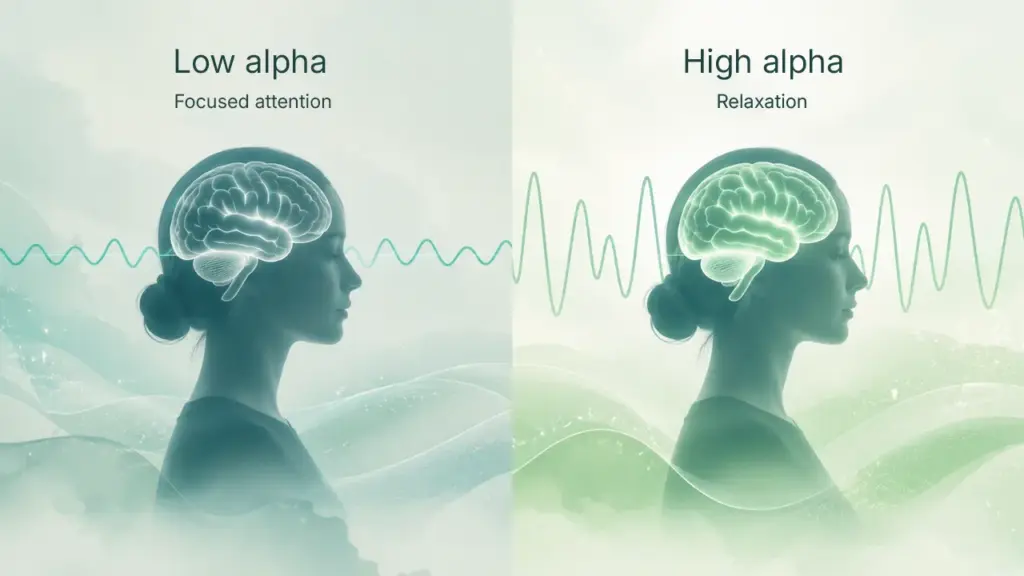
Here is the twist that confuses most people: alpha is not always good or always bad. It depends on what you are training. Attune uses alpha in two opposite ways, in two different protocols, with the same headband. The same brainwave can mean two completely different things, and the protocol you choose is what gives the signal its meaning.
Lower Alpha for Focused Attention (CEVAM)
In the Closed-Eyes Visual Attention Meditation (CEVAM) focus protocol, lower alpha is the goal. When you direct attention toward your internal visual field the dark space behind your closed eyelids your visual cortex re-engages, and alpha drops in the occipital region. That drop is the neural marker of focused attention. When your mind wanders, alpha rises, and Attune plays a gentle audio cue to flag it.
Higher Alpha as the Reward in Relaxation Training
In the Alpha-Up relaxation protocol, higher alpha is what you are after. As your brain lets go and you settle into deeper rest, alpha rises. Attune reinforces that with soothing audio, helping you stay in the relaxed state. Same hardware, same brainwaves, opposite training target.
Why This Matters for Your Practice
Most meditation apps guess what is happening inside your head. Attune listens. By reading your alpha activity through the BrainBit EEG headband, it gives you moment-to-moment feedback that matches your intention whether that is sharpening attention or settling into deep relaxation.
It also takes the pressure off. You do not need to wonder whether you are doing it right. Your brainwaves already know. You hear the signal in real time, you respond, and the feedback loop closes within seconds. Over weeks, you build an internal sense of what focus and relaxation actually feel like, anchored in real neural data.
What the Research Says About Alpha Training
Neurofeedback research on alpha brain waves meditation goes back several decades. The core finding has held up: when people receive real-time feedback on their alpha activity, they learn to modulate it faster than they would through meditation alone. One often-cited study compared a group practising alpha-feedback meditation to a control group practising the same protocol without feedback, and found the feedback group reached comparable alpha shifts roughly two and a half times faster.
The mechanism is unsurprising once you see it: the brain learns from immediate, accurate reward signals, and alpha is one of the few neural markers fast and reliable enough to function as that reward. Most subjective meditation feedback “did that feel deep?” arrives too late and too vaguely to drive learning. Alpha arrives within a second.
What a Daily Alpha Practice Looks Like
A useful default for alpha brain waves meditation is two short sessions a day. Morning: ten minutes of CEVAM focus training, when your brain is naturally most alert. Evening: ten to fifteen minutes of Alpha-Up relaxation, when you want to wind down. The same headband, the same kind of signal, two opposite goals. Over a few weeks the pattern becomes self-reinforcing alert in the morning, calmer in the evening, and a more flexible nervous system in between.
Common Misconceptions About Alpha
Alpha is not the same as “being in flow.” Flow states involve a different pattern across frontal regions and are not just an alpha phenomenon. Alpha is also not the marker of “good” meditation in general — only of specific neural states relevant to the protocol you are running. And alpha is not a single number to chase. What matters is the change relative to your personal baseline, which Attune calibrates at the start of each session.
Another common confusion: people sometimes assume more alpha is universally calmer. It is not. Very high alpha can co-occur with drowsiness, light dozing, or the mental drift that precedes sleep none of which is what most people mean by meditation. The shape of the alpha curve matters more than the absolute level.
The Takeaway
Alpha waves are the bridge between rest and focus, between letting go and tuning in. With Attune, you can learn to work with them on purpose, training your mind with real-time feedback based on your own brain activity. Try Attune today and hear your alpha in action. You can read more on the Attune FAQ.
Frequently Asked Questions
How do you measure alpha brain waves in meditation?
With electroencephalography (EEG). Sensors placed on the scalp pick up the electrical activity of the brain, and software isolates the 8–12 Hz alpha band. Attune uses the BrainBit headband with sensors over the occipital region, where alpha is strongest, and translates the signal into real-time audio feedback.
Are high alpha waves good or bad?
Neither it depends on your goal. For focused attention, higher alpha means your mind is drifting, so lower is better. For deep relaxation, higher alpha is the marker of letting go, so higher is the goal. The same brainwave can be a success or a slip, depending on the protocol.
Can you train your alpha waves?
Yes. With neurofeedback like Attune, you can directly train both the suppression and the enhancement of alpha. Studies on alpha neurofeedback show measurable changes in attentional control after a few weeks of consistent training. The training works because the brain learns from the immediate audio reward, the same way any skill is acquired.