How Exercise and Meditation Train Overlapping Systems
Meditation is often treated as a purely mental practice, but the state of your body has a major effect on how easily attention stabilises during a session. Exercise and meditation are not a stretch combination they share so much neurological territory that doing both consistently produces faster gains in attention, mood, and self-regulation than doing either alone.

Exercise Regulates Arousal
Focused attention requires a nervous system that is awake but not overstimulated. Regular physical exercise helps regulate the baseline arousal that supports this state. Without enough movement, arousal often runs too low leading to drowsiness during sessions and a tendency for alpha to drift up. With chronic stress and little physical outlet, arousal can run too high leading to anxious thought loops that compete with focus. Exercise normalises both directions and produces the calm-alert baseline the practice depends on.
Better Body Awareness, Better Focus
CPhysical training increases sensitivity to bodily signals tension, breathing, posture, fatigue. This carries directly into meditation. It becomes easier to notice the early signs of restlessness or disengagement and correct them before attention has fully drifted. The body becomes part of the practice rather than a vehicle the practice has to ignore.
Why Exercise and Meditation Strengthen Executive Control
Regular aerobic exercise strengthens prefrontal control networks involved in impulse regulation, emotional balance, and sustained attention. These are precisely the same systems trained during focused-attention meditation. The two practices reinforce each other at the neural level the prefrontal capacity built by running or cycling makes meditation easier, and the prefrontal capacity built by meditation makes hard workouts easier to commit to.
Timing Matters
Light to moderate exercise earlier in the day often improves the quality of later meditation sessions. The arousal regulation effect kicks in within a few hours and lasts well into the afternoon and evening. Intense exercise immediately before a meditation session, by contrast, can be stimulating in ways that make the first ten minutes of practice harder the body needs a short recovery period before sitting works well.
Many people settle on a daily rhythm where movement happens in the morning or midday and the meditation session lands later late afternoon for focus training, evening for relaxation. The order can be reversed, but the half-hour-or-so buffer matters either way.
What Kind of Exercise Helps Most
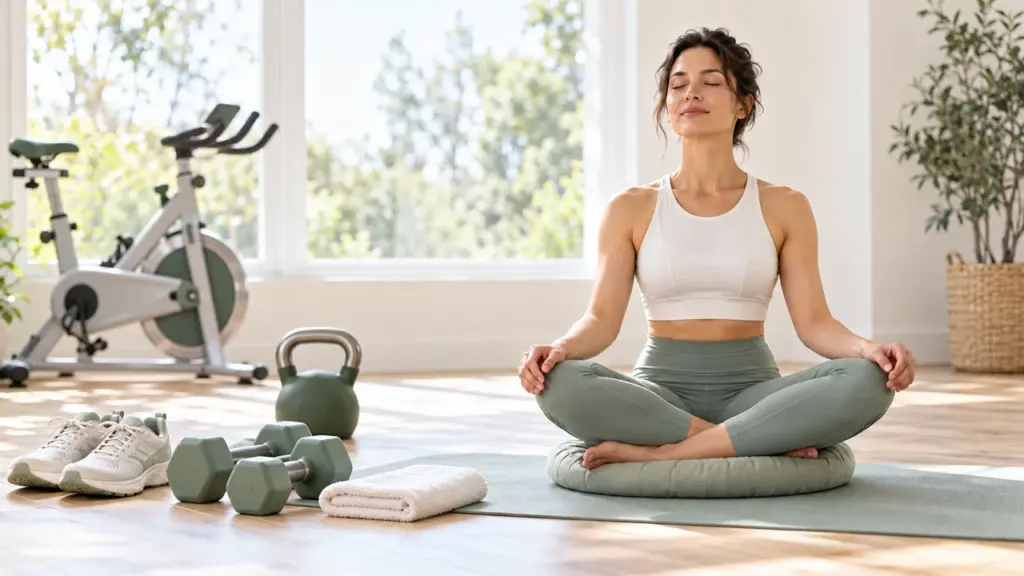
Three categories are particularly compatible. Aerobic exercise running, cycling, swimming, brisk walking produces the clearest baseline-arousal regulation. Strength training builds general physical stability and supports good posture during sitting meditation. Mobility work yoga, stretching, simple flexibility routines keeps the body comfortable enough that posture does not become the focus of the session. Most practitioners benefit from some combination of all three, with the specific mix depending on preference and life stage.
How Attune Reveals the Effect
Session analytics in Attune make the exercise effect visible. Sessions on training days often show lower average alpha and better catch speeds than sessions on sedentary days though the effect varies by person and by exercise type. A simple experiment: track your meditation analytics for two weeks of consistent exercise, then two weeks of less movement, and compare. The difference is usually obvious.
The Reverse Direction
Meditation also makes exercise easier. Better attentional control means better workout focus, fewer self-defeating thoughts during hard intervals, faster recovery between sets. Athletes have used focused-attention training for decades for exactly this reason the mental side of physical performance is more trainable than people assume, and the same neural circuits show up in both contexts.
Building a Sustainable Loop
The challenge is consistency. Both practices reward daily repetition, and trying to install both habits at once is harder than installing one at a time. Most people who succeed in combining exercise and meditation did so sequentially three or four months of consistent exercise first, then a meditation habit layered on top, or the reverse. Once both are in place, they tend to support each other and become self-sustaining.
The Takeaway
Meditation does not happen in isolation from the body. Exercise and meditation create the physiological foundation for stable attention, emotional regulation, and calm alertness. Training the body makes training the mind easier and the reverse.
What the First Month Tends to Look Like
When exercise and meditation becomes a daily practice, the arc tends to follow a predictable pattern. Week one is almost always busier than expected. The mind is loud, the body is unfamiliar with stillness, and progress feels invisible. Most people interpret this as failure. It is not. It is the brain meeting the practice for the first time, which is meant to feel busy and a little uncomfortable.
Week two often brings a small frustration plateau. The novelty has worn off, the obvious early gains have already happened, and the practice starts to feel like work. This is the most common drop-out window. Push through. The underlying neural systems are consolidating, even when the felt experience says otherwise.
Week three is usually where things begin to repay themselves. The catches happen faster. The internal narration that used to fill every session quiets a little. By the end of the month, most practitioners describe the practice as easier in a way that is hard to explain the same session that felt effortful in week one now feels almost ordinary.
If you keep going past the first month, the gains continue but they look different. Less about visible session quality, more about carry-over into daily life small moments of pause before reacting, slightly cleaner attention during work, a marginally calmer presence in difficult conversations. The skill built on the cushion shows up off the cushion, which is the point.
With Attune you can stop guessing and start measuring. Try Attune today or read more on the Attune FAQ.
Frequently Asked Questions
Should I exercise before or after meditation?
Usually before, with at least thirty to sixty minutes of buffer. Light exercise earlier in the day with meditation later is the most reliable pattern. Intense exercise immediately before sitting tends to keep arousal high enough that focus is harder.
What if I have no time for both?
Either is better than neither. If you have to choose, alternate days exercise three times a week, meditate four rather than abandoning one entirely. Both practices benefit from any consistent input, even at low volume.
Does yoga count as both exercise and meditation?
Partially. Yoga combines mobility work with some attentional training, but the focused-attention component is usually lighter than dedicated sitting meditation. Most practitioners benefit from doing both yoga and a separate focused-attention session, rather than treating yoga as a complete substitute.