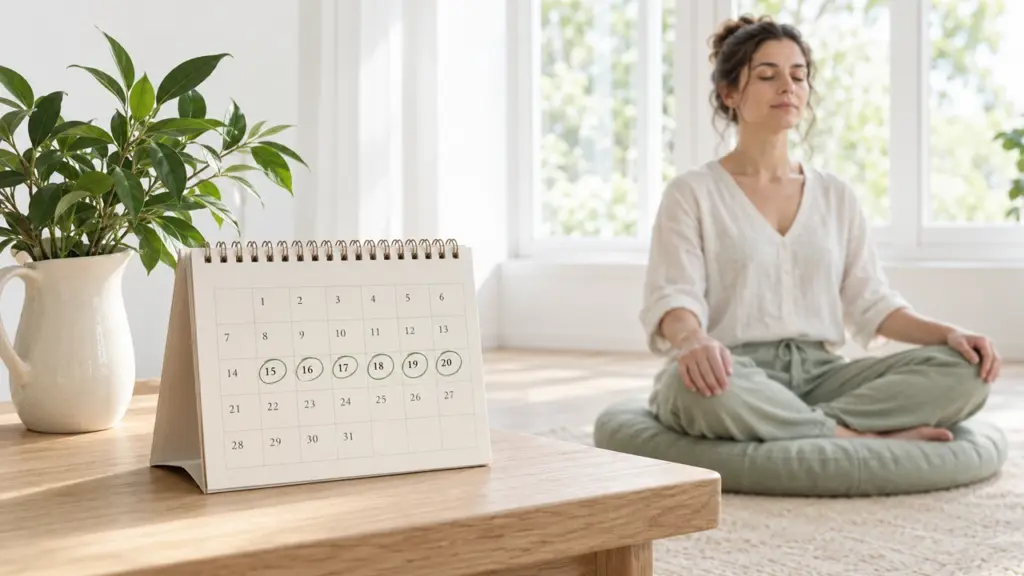
Why Meditation When Tired Is a Different Practice
If your meditation has ever felt much harder after a bad night of sleep, you are not imagining it. Meditation when tired genuinely is a different practice the brain you sit down with is not the brain you usually train. Understanding what is happening underneath helps you adapt rather than blame yourself for a session that did not click.

Poor Sleep Raises Baseline Alpha
When you have not slept enough, the visual cortex spends more time idling. Alpha activity rises at baseline, not because you are relaxed in a useful way, but because the brain is tired and slipping toward disengagement. In a focus session, this shows up immediately: audio cues appear more often than usual, sometimes within seconds of starting, because your alpha is already drifting upward without any drift in your attention.
This is a physiological effect, not a motivational one. You are not less committed today. Your nervous system is starting from a different floor. Treating that physiological starting point as evidence of personal failure is the most common mistake people make when practising meditation when tired and it converts a difficult session into a discouraging one.
What Actually Helps on Low-Sleep Days
Four practical adjustments make tired sessions more productive. First, shorten the session. Five minutes of clean engagement is better than fifteen of struggle. Second, switch to the Relaxation Protocol if the focus protocol feels impossible rising alpha is what relaxation training rewards, so a tired brain accidentally trains well in this mode. Third, sit upright in a slightly more alert posture than usual, and consider doing the session near a bright window. Fourth, drop expectations about session analytics they will look worse than average, and that is exactly what they should look like.
Why Meditation When Tired Is Not a Waste
Even on the worst nights, a short session has value. The brain learns from showing up, not just from peak performance. Missing the day breaks the consistency loop more than a mediocre session does. The catches you do manage slower, harder, fewer still reinforce the same circuits that produce easy catches on a well-rested day. Meditation when tired is the practice of meeting your brain where it is, rather than where you wish it were.
The Trap of Forcing It
The instinct on a low-sleep day is to try harder to compensate for the physiological disadvantage with mental effort. This backfires. Forcing focus tightens the body, recruits the stress response, and raises baseline arousal in a way that competes with attention rather than supporting it. The tired brain responds better to soft attention than to muscular effort. Lower the bar. Engage gently. Return when you drift. End the session when the returns degrade, not when the timer rings.
How Attune Reads a Tired Brain
With Attune, the difference between a rested and tired session is visible in the analytics. Catch rates spike, average alpha runs higher, and the session looks markedly different from your usual baseline. This visibility is useful it confirms what the felt experience already told you, and it removes the doubt about whether you were doing something wrong.
Working Around Chronic Sleep Debt
Occasional bad sleep is easy to absorb. Chronic sleep debt where you are running on six hours a night for weeks is a different problem. The practice can still continue, but the expectations need to shift permanently rather than just for a day. Most users in this situation benefit from doing relaxation protocols more often than focus protocols, until the sleep debt resolves. Trying to train attention against a depleted nervous system tends to be discouraging without being effective.
There is also a deeper point. Meditation cannot substitute for sleep. If you find yourself consistently relying on relaxation sessions to compensate for inadequate rest, the more important intervention is upstream: getting more hours of actual sleep. The relaxation training will pay off much more once sleep is in a better place.
Adapting, Not Skipping
The strongest move with meditation when tired is to adapt rather than skip. Even a three-minute relaxation session eyes closed, body soft, nothing demanded maintains the habit thread and provides genuine nervous-system benefit on a hard day. Tomorrow’s practice is much easier to do if today’s was not abandoned, even if today’s was tiny.
Useful Pairings With the Practice
Two small habits compound with meditation when tired. First, a few minutes of light movement before the session a short walk, simple stretching gently raises arousal so the meditation lands on a slightly less depleted nervous system. Second, hydration. The tired brain is also frequently a dehydrated brain, and a glass of water before sitting often makes the session feel different by ten minutes in. Neither of these replaces sleep. Both make the session that happens despite tiredness slightly more productive.
When to Skip the Session Entirely
There is a small category of days when even short, gentle meditation when tired is not the right call. Acute illness with a fever. The first night after a baby is born or a major life shock. A migraine in progress. In these cases, your nervous system needs unmediated rest, and trying to train attention or relaxation will either fail or backfire. Skip without guilt and return the next reasonable day. The practice is durable; it survives gaps. What it does not survive is a pattern of forcing yourself through sessions that the body is actively refusing.
The Takeaway
Sleep sets the stage for focus. When it is missing, do not judge your practice adapt it. Shorter sessions, lighter expectations, often the relaxation protocol instead of focus, and a quick check-in with kindness rather than discipline. Try Attune today or read more on the Attune FAQ.
Frequently Asked Questions
Can meditation help with anxiety and depression?
Research consistently shows that focused-attention and mindfulness-based practices can reduce anxiety symptoms and support depression treatment when used alongside professional care. Meditation for anxiety depression is not a replacement for therapy or medication; it is a complementary practice that trains the attentional and regulatory systems that underlie both conditions.
Should I skip meditation if I did not sleep well?
Usually not. A shortened, gentler session preserves the habit and still benefits the nervous system. Skipping breaks the consistency that produces long-term gains. The exception is true sleep emergency if you are genuinely impaired and need rest more than training, take the day.
Can meditation help me fall asleep?
Yes. The Relaxation Protocol is well suited for the wind-down period before bed. It lowers arousal and trains the nervous system to settle. It is not a sleep aid in the medical sense, but it is a reliable supporting practice for many people with mild sleep difficulty.